
A Course in Disaster
How a Lehigh capstone course sent architecture students into a simulated humanitarian crisis—and sparked a student chapter built to carry the work forward
Just days into last fall’s semester, a group of Lehigh University students boarded a plane for rural Oregon, where they would spend several days in a hands-on disaster response simulation.
The trip marked the beginning of a sponsored capstone course in Lehigh's Department of Art, Architecture and Design (AAD), created in partnership with ShelterBox USA, the U.S.-based arm of the international disaster relief organization. For the students, it was an abrupt shift from the studio and a first look at how humanitarian responders assess communities after disaster.
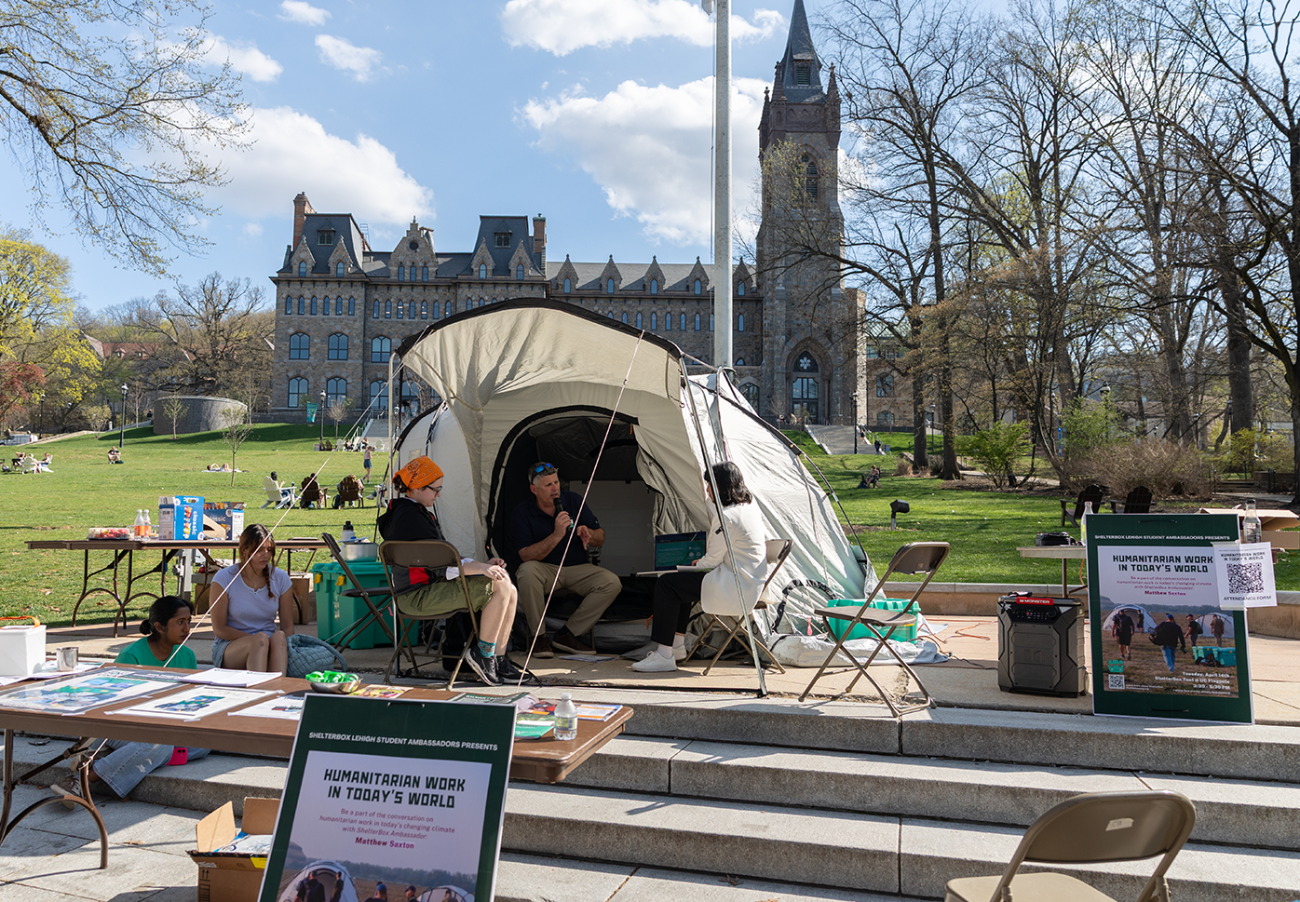
What began as an introduction to humanitarian response has since grown into something more permanent: Lehigh's ShelterBox Student Chapter, which held its inaugural event, Humanitarian Work in Today's World, on April 14, 2026.
Designing for Disaster
The partnership grew from aligned interests. ShelterBox USA was exploring how to engage younger generations in humanitarian work, while Lehgh's AAD faculty saw an opportunity to connect classroom learning with real-world issues.
“A common question with undergraduate students is, ‘How do I apply this to things that I really believe in?’” said Kevin Lahoda, assistant professor of architecture.
John Glanville '77, a longtime Rotarian and ShelterBox USA board member, saw an opportunity to bring those interests together. Conversations with AAD department chair Nick Sawicki eventually led to a sponsored capstone course designed to challenge students to think differently about disaster response.
“ShelterBox’s mission is deeply human-centered,” said Christina Zhang, assistant professor of architecture. “It asks students to think about design as a tool for understanding people and responding to real needs.”
Learning in Uncertainty
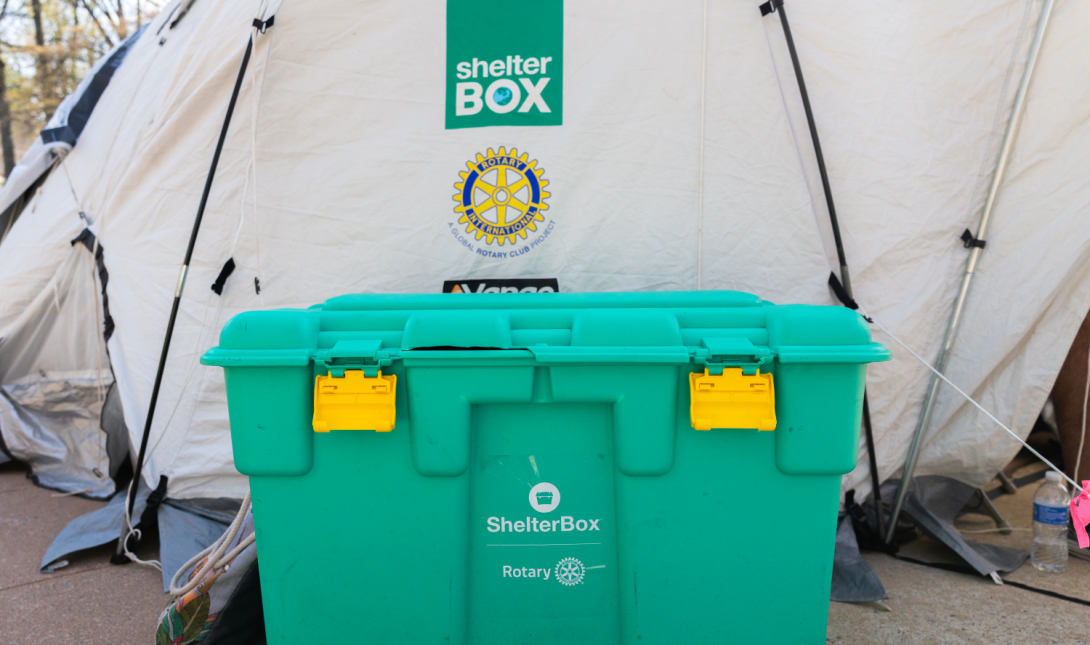
The students' work with ShelterBox began in Echo, Oregon, where they participated in a ShelterBox Ambassador Field Experience (S.A.F.E.), a multi-day simulation designed to immerse participants in the realities of post-disaster response. The simulation placed students directly into uncertainty. Working through fictional disaster scenarios, they encountered communities that had lost homes, clean water, and access to basic resources. Their task was not to solve problems immediately, but to listen, assess needs, and determine what support might truly help.
For architecture student Farah Noor, the experience felt unfamiliar from the start. “It was this mix of excitement and nervousness,” she said. “We’d had a long travel day, and then we were setting up tents, which was not exactly what I was used to. But getting to know new people and learning how ShelterBox operates in the field was really exciting and grounding.”
The trip revealed how ShelterBox works behind the scenes. Rather than dropping off identical aid kits, response teams tailor their support to what people actually need, conducting detailed assessments before distributing shelter materials, water filtration systems, or home-repair tools. Students learned how ShelterBox’s alliances with organizations such as the Red Cross and other humanitarian partners can give its teams access to areas and information that would otherwise be difficult to reach, a critical advantage during complex emergencies.
Students also learned how ShelterBox is adapting to a changing humanitarian landscape. As global crises intensify, the organization is reducing plastics by hundreds of thousands of units, pre-positioning aid, and sourcing materials locally, efforts that can lower environmental impact while supporting local economies.
“I understood the basic concept that aid organizations go in and help people, but I hadn’t really thought about how complicated and layered that process actually is,” Noor said.
“We’re interested in understanding what locals are looking for and where the fit occurs with what ShelterBox provides,” Glanville added.
Beyond the Studio
Back on campus, students faced a new challenge: turning what they learned into meaningful action. The ShelterBox capstone asked them to approach design less as a fixed assignment and more as an open-ended process.
“In a normal class setting, you have a specific prompt to work with,” Noor said. “But here we had to essentially develop the project prompt itself before we could even begin.”
The experience changed how Noor approached design. “I think my design process became more human-centric and process-driven,” she said. “I became more aware of how small design decisions can make a space or product more accessible and enjoyable for the user.”
Faculty members saw the same shift across the group. Beyond design principles, students had to think about communication, fundraising, and public engagement.
“Students have these design skills,” Zhang said, “but they don’t always realize how versatile the skill set required is — how you communicate a mission effectively and how you combine messy fieldwork with the messaging needed to engage people.”
Lahoda said the experience encouraged students to think differently about their role. “They’re not just asking, ‘How do I make this look good?’” he said. “It’s, ‘How do I provide value? How do I contribute meaningfully to something larger?’”
Building Something That Lasts
As the academic year progressed, students began thinking about how the work could continue beyond the capstone. The result was Lehigh’s ShelterBox Student Chapter.
“Building a chapter felt like a way to make sure this momentum carries forward,” Noor said, “and to give students the opportunity to be part of ShelterBox’s meaningful work.”
The chapter’s first major event brought Matt Saxton, ShelterBox’s vice president of development, to campus to discuss humanitarian response and growing global crises while introducing students to opportunities for involvement.
What Comes Next
With the chapter now moving beyond its launch, Glanville reflected on its future. “There’s been a lot of effort put into this,” he said. “We’d like to see it be a success.”
Months after boarding a plane to Oregon, the students have begun turning experience into action. Through Lehigh’s ShelterBox Student Chapter, they are helping chart what humanitarian work can look like for the next generation.
The chapter will continue independently in the 2026-27 academic year, led by a new cohort of students recruited during the capstone. Their work will build on the foundation established by the inaugural group.
“I hope it becomes a space where students from different disciplines can have a role in humanitarian work,” Noor said. “These problems are too complex for any one field to solve alone, and I think a chapter like this can reflect that.”